Sample article. General guidance prepared as a starting point — awaiting review by Morbella Instruments. Specifications, finishes and packaging are always confirmed in writing for each order.
Private label lets a distributor, clinic supplier or beauty brand sell instruments under its own name. The instruments are only half of the project; the brand details around them deserve the same attention.
Prepare your artwork
Send your logo or wordmark as a vector file (SVG, EPS, AI or PDF). Fine lines and very small text may not mark cleanly on narrow instrument surfaces, so a simplified version of a logo is often useful.
Decide where the mark goes
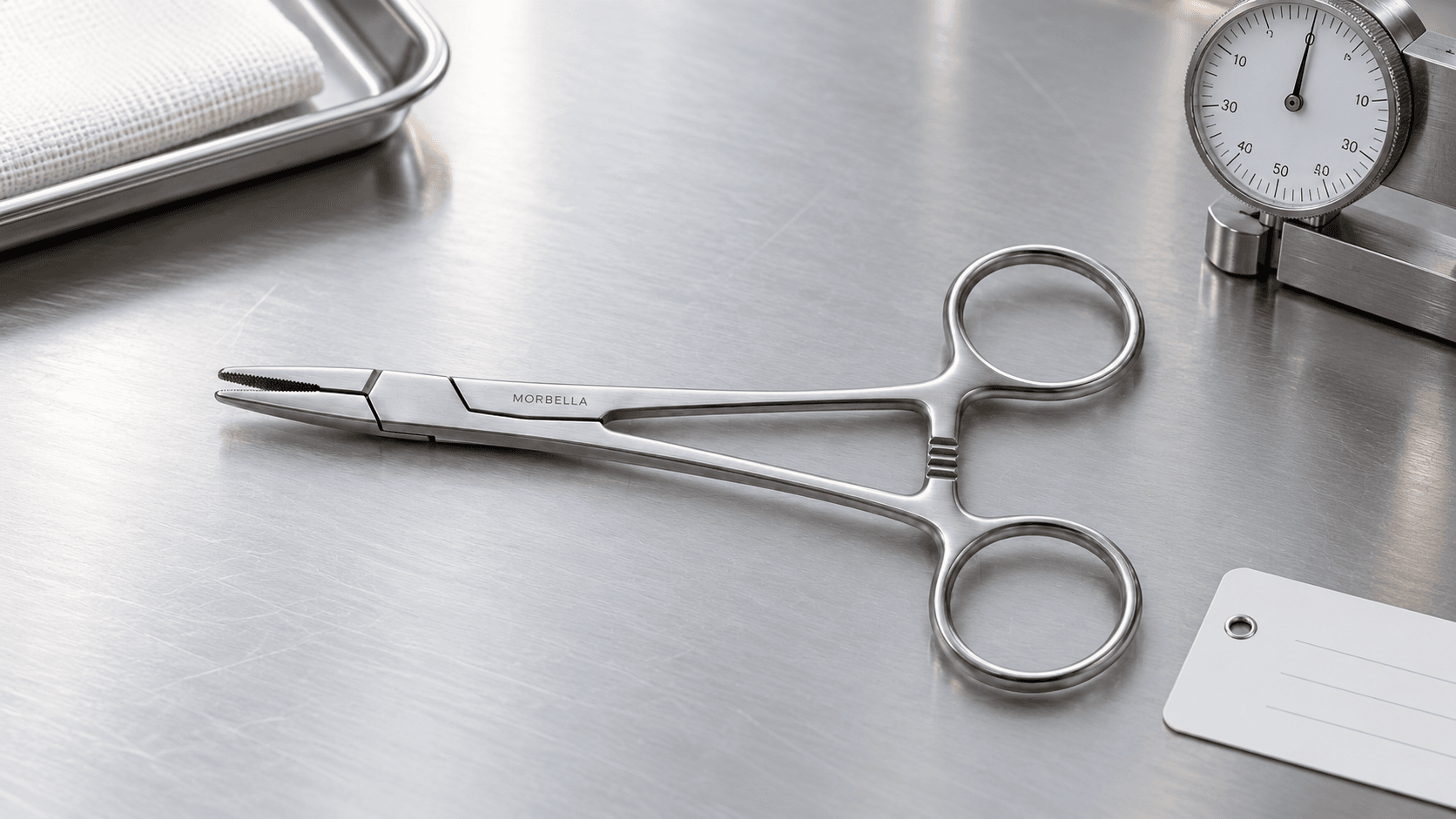
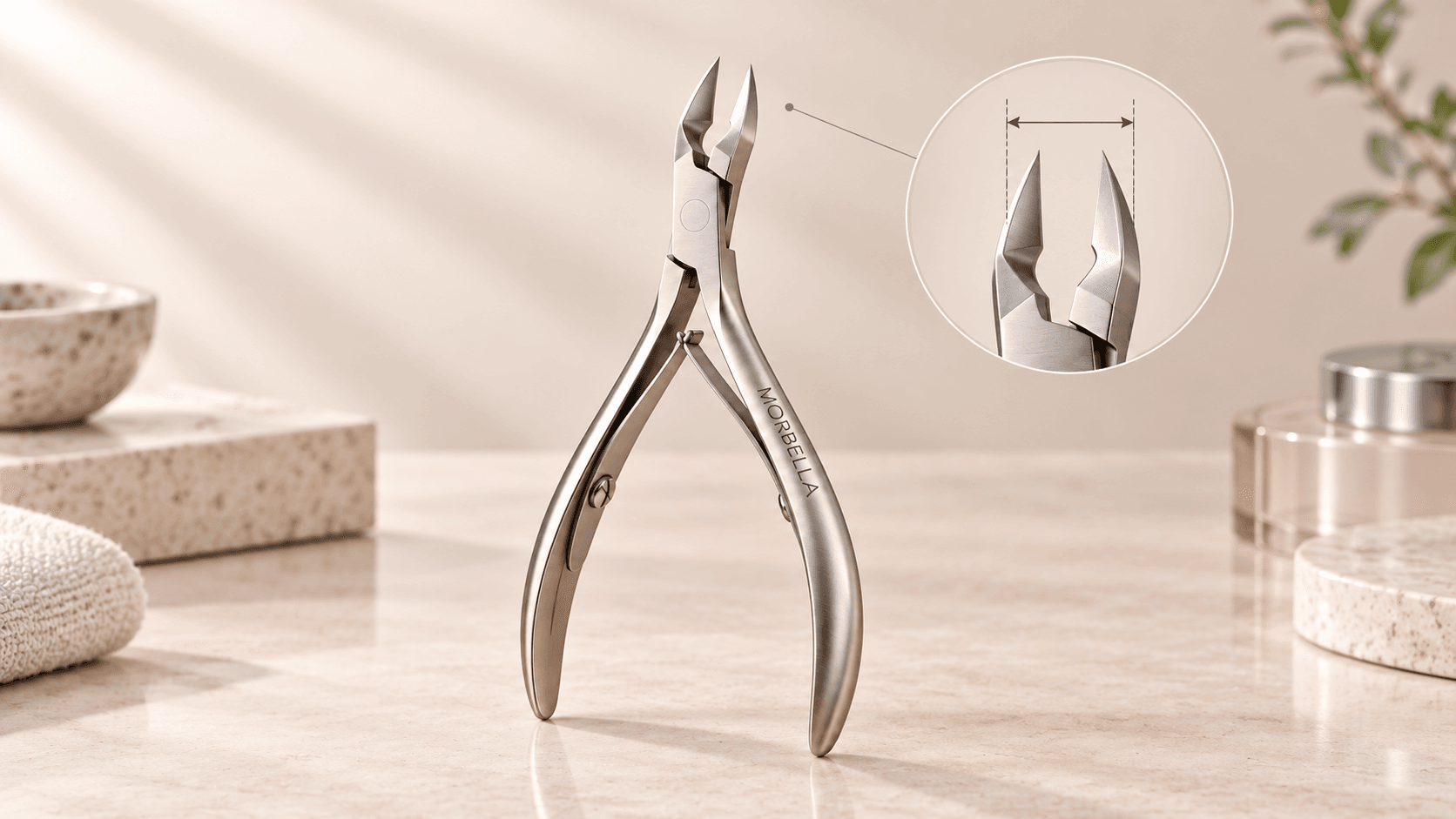
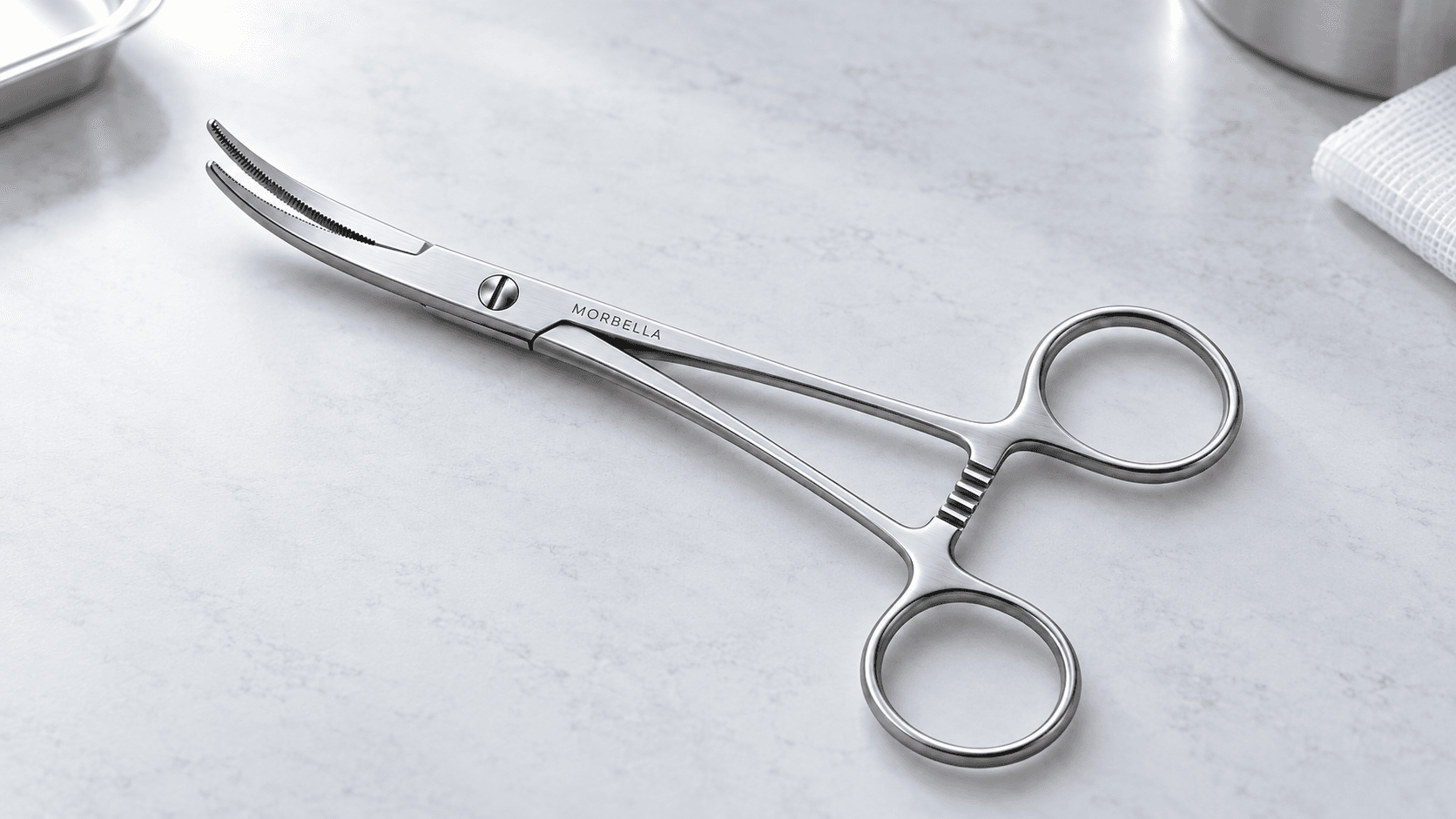
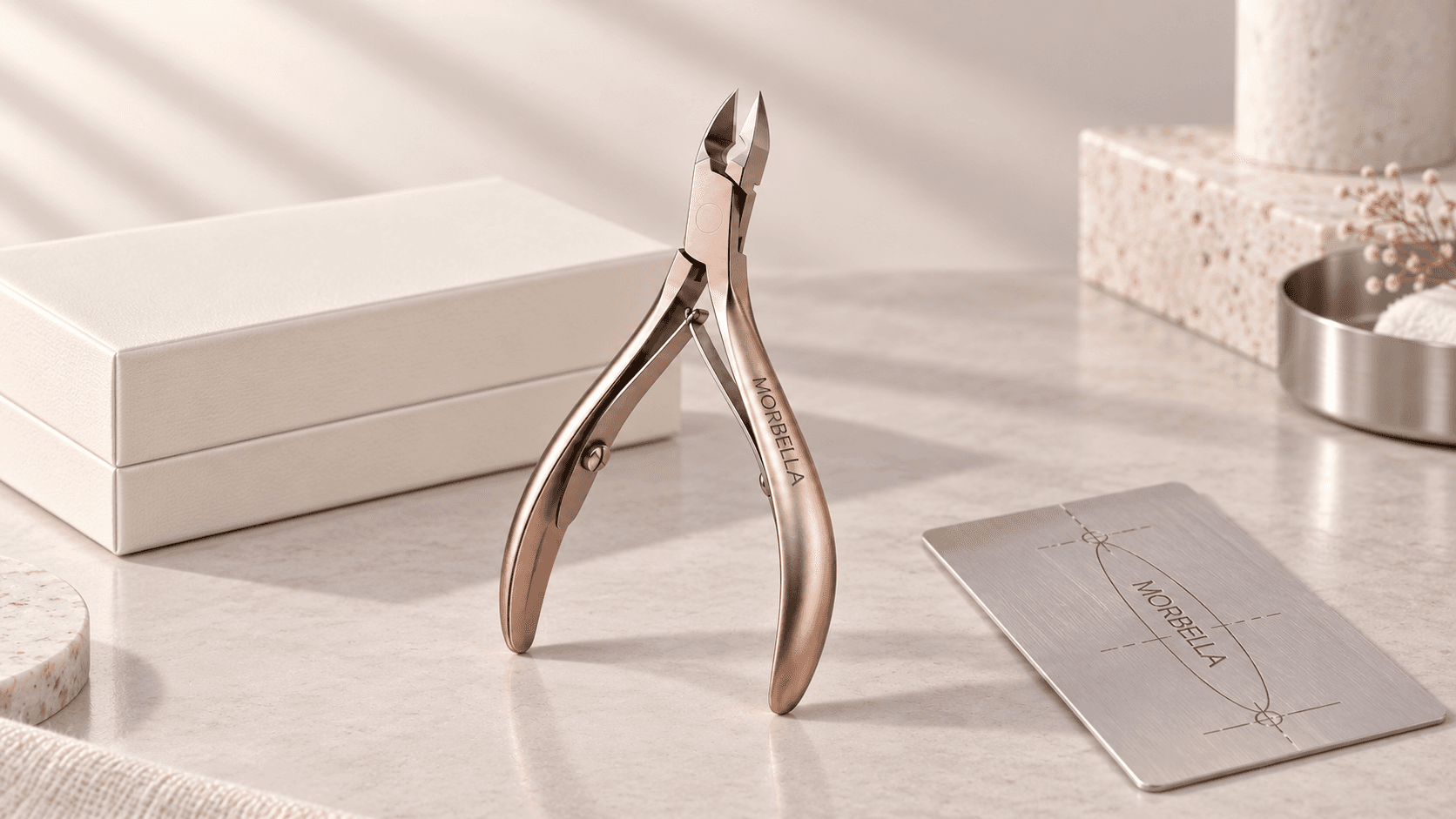
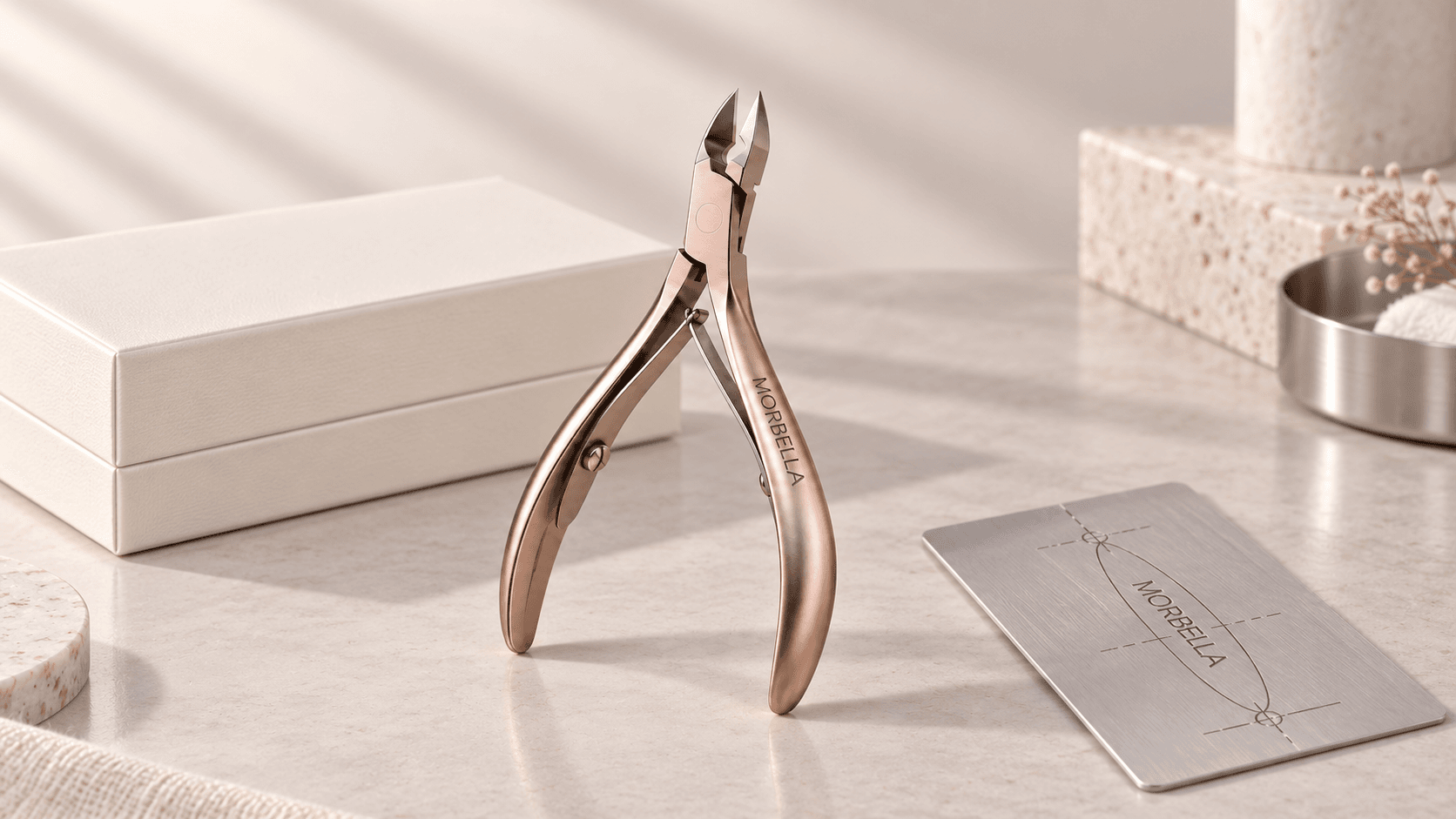
Common positions are the shank of scissors, the arm of tweezers and the handle of nippers or pushers. Tell us:
- the text or logo for each item
- any item codes or size markings you also need
- whether every item carries the same mark
Choose the packaging level
- Bulk packing — for distributors who repack locally.
- Individual pouches — protective, practical and easy to label.
- Retail boxes — printed with your brand for shelf or online sales.
- Kits and cases — for example a manicure kit or a travel manicure case assembled from tools you choose.
For retail packaging, share your dimensions, artwork and any text your market requires.
Build the range in layers
Start with a few core patterns that sell in every market — for beauty that is usually tweezers, a cuticle nipper and cuticle scissors; for surgical, dissecting scissors, tissue forceps and a needle holder — then add specialist patterns once the core range is moving.
Approve a sample first
A physical sample confirms the pattern, finish, mark and packaging together. Approving it in writing before production keeps the whole order aligned with what you expect.
The clearer the brief, the closer the first sample is to your final range.
A realistic timeline
Private-label projects usually move through four steps: brief and quotation, sample production, sample approval, then the production order. The step that takes longest is often approval — artwork changes, packaging proofs and internal sign-off. Naming one approver and sending vector artwork early keeps the project moving.
Questions to answer before you request a quote
- Which patterns form the core range, and which come later?
- One finish across the range, or different finishes per product?
- Where is the brand mark on each item?
- Bulk, pouches, retail boxes or kits — and who supplies the artwork?
- Which markets will the range be sold in, and what labelling do they require?
See how private-label orders work on our OEM & private label page, or start a request.
- #OEM
- #private label
- #laser marking
- #packaging
Questions buyers ask
What artwork format is best for laser marking?
A vector file such as SVG, EPS, AI or PDF. Very fine lines or tiny text may need simplifying for narrow instrument surfaces.
Can every item in a range carry a different mark?
Yes. Specify the text, logo or codes for each item in your brief; the marks are confirmed with the sample.
Which packaging options are available for private label?
Common options are bulk packing, individual pouches, printed retail boxes and kits or cases. The exact packaging is agreed per order.
Next step
Planning an order? Share your patterns, quantities and branding — we reply with questions or a quotation.