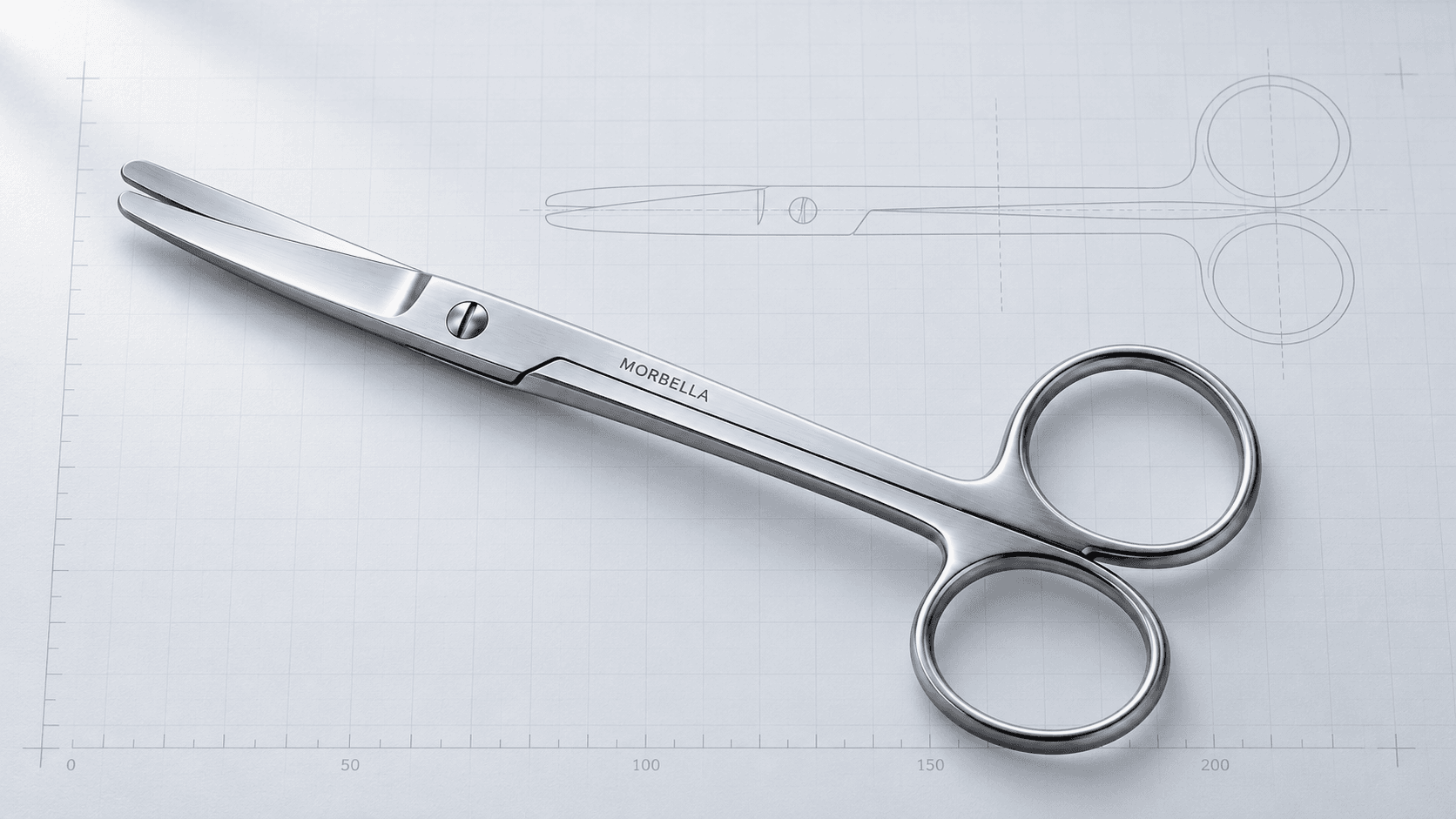
Sample article. General guidance prepared as a starting point — awaiting review by Morbella Instruments. Specifications, finishes and packaging are always confirmed in writing for each order.
Surgical scissors are ordered by pattern name, and most catalogue confusion comes from patterns that look similar in a photo. This guide covers the patterns buyers ask about most often and the details worth putting in an RFQ.
Dissecting scissors: Metzenbaum
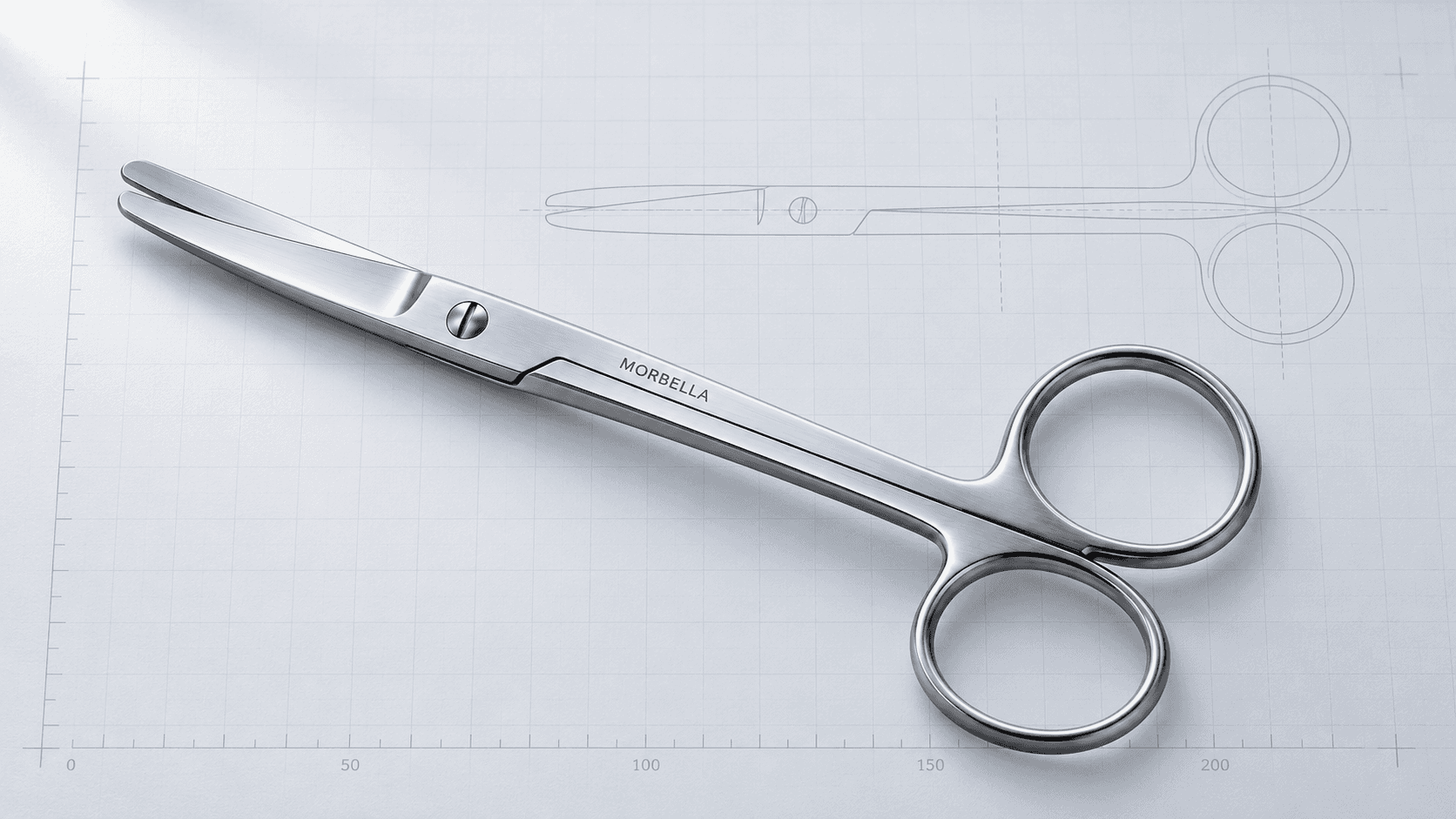
The Metzenbaum pattern has long, slender shanks and comparatively short, fine blades. It is usually listed as a dissecting scissor and is commonly supplied straight or curved, with blunt or sharp tips.
Operating scissors: Mayo
The Mayo pattern is heavier, with shorter shanks and sturdier blades. Buyers often stock straight and curved Mayo scissors side by side because different users prefer each.
Fine scissors: iris
Iris scissors are small, fine-pointed scissors for delicate, detailed work. Because they are small, the tip style (sharp/sharp is common) matters more than the overall length.
Suture and bandage scissors
Suture scissors and bandage scissors are separate subcategories with distinctive blade shapes. If you stock them, list them by name and include a reference photo — naming conventions differ between markets.
What to specify for every scissors pattern
- Pattern name and a reference (code, photo, sample or drawing)
- Blade shape: straight or curved
- Tip style: sharp/sharp, sharp/blunt or blunt/blunt
- Length for each size you need
- Finish (for example satin or mirror) and marking
- Packaging: individual pouches, boxes or bulk
Specifications such as length, tip style, finish and marking are confirmed in writing with each quotation — the catalogue shows patterns, not fixed products.
Building a balanced scissors range
Common mix-ups to avoid
- "Dissecting" vs "operating". Some catalogues use these loosely. Always add the pattern name (Metzenbaum, Mayo) and a photo.
- Curved without direction. Most curved scissors curve the same way, but if your market expects a particular variant, say so.
- Length without tip style. Two scissors of the same length can have very different tips; specify both.
Marking and packaging for scissors
Scissors are usually marked on the shank or near the joint, where the surface is flat enough for a legible mark. For distribution, individual pouches with a label for pattern, length and your code make picking and stock checks far easier.
Most distributors start with one dissecting pattern, one operating pattern and one fine pattern, then add curved variants and lengths as demand grows. Browse the surgical scissors category or request a quote with your list.
- #surgical scissors
- #Metzenbaum
- #Mayo
- #iris scissors
- #buying guide
Questions buyers ask
What is the difference between Metzenbaum and Mayo scissors?
Metzenbaum scissors have longer shanks and finer, comparatively short blades; Mayo scissors are heavier with shorter shanks and sturdier blades.
Should I order straight or curved scissors?
Many buyers stock both. Specify blade shape for each line in your RFQ, along with the length and tip style.
Can surgical scissors carry our own brand mark?
Yes — private-label laser marking is available on request; the mark position and finish are confirmed with the quotation.
Next step
Planning an order? Share your patterns, quantities and branding — we reply with questions or a quotation.